Boosting the energytransition in Kronenberg
In Kronenberg, a small 450 household-strong village in North Limburg, southeastern Netherlands, the energy transition is underway. It is being driven forward by the enthusiasm and commitment of EnergieKronenberg, a citizen collective. EnergieKronenberg started as a working group within the local municipality but since mid-2018 has been an independent collective with a close relationship with the municipality. The group has one municipality member on it, and they reached out to mPOWER to work alongside them. The collective currently consists of 15 members and volunteers.
EnergieKronenberg aspires for Kronenberg to become energy neutral by 2030. This is a grand ambition. As Piet Selen, Chairman of EnergieKronenberg said at a knowledge exchange event partnered by mPower in May 2022,
“People say we will not reach energy neutral by 2030, and I also think this is true. But if we do nothing, nothing will happen. Everyone has to work together.”
EnergieKronenberg has started taking steps towards its goal. Crucial to becoming energy neutral by 2030 is getting Kronenberg off gas. Four years ago the motivation for this goal included ending dependence on countries like Saudi Arabia. The recent invasion of Ukraine by Russia has only reinforced the urgency of the goal.
The collective commissioned a feasibility study that explored different pathways to end gas usage. Options included replacing gas with hydrogen, ‘going electric’ (i.e heat pumps and energy efficiency), collective heat storage, and hybrid options. The collective concluded that ‘going electric’ is the best option for the village’s size. Going electric means investing in deep home energy efficiency retrofits and installing heat pumps to generate heat.
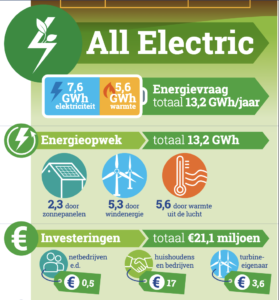 Once a pathway to becoming energy neutral was selected, the collective began organising a number of initiatives: writing a climate agreement with the municipality; supporting citizens with advice and information on how to install a range of measures from LED lighting to solar panels; conducting household energy audits that establish the household’s energy use and potential for heat pumps and deep retrofitting measures; and applying for a subsidy that would provide funding for the measures. In addition, the collective also publishes a magazine 2-3 times a year to engage the wider community in energy transition topics.
Since 2021, mPower has been supporting EnergieKronenberg in their citizen and political engagement processes. EnergieKronenberg has had both successes and setbacks. A major success has been identifying and working with ‘frontrunner’ residents who want to make their home natural gas-free. A recent major setback was not acquiring the subsidy, which went to the neighbouring village instead.
As of 2022, the three main energy transition challenges facing EnergieKronenberg are:
Once a pathway to becoming energy neutral was selected, the collective began organising a number of initiatives: writing a climate agreement with the municipality; supporting citizens with advice and information on how to install a range of measures from LED lighting to solar panels; conducting household energy audits that establish the household’s energy use and potential for heat pumps and deep retrofitting measures; and applying for a subsidy that would provide funding for the measures. In addition, the collective also publishes a magazine 2-3 times a year to engage the wider community in energy transition topics.
Since 2021, mPower has been supporting EnergieKronenberg in their citizen and political engagement processes. EnergieKronenberg has had both successes and setbacks. A major success has been identifying and working with ‘frontrunner’ residents who want to make their home natural gas-free. A recent major setback was not acquiring the subsidy, which went to the neighbouring village instead.
As of 2022, the three main energy transition challenges facing EnergieKronenberg are:
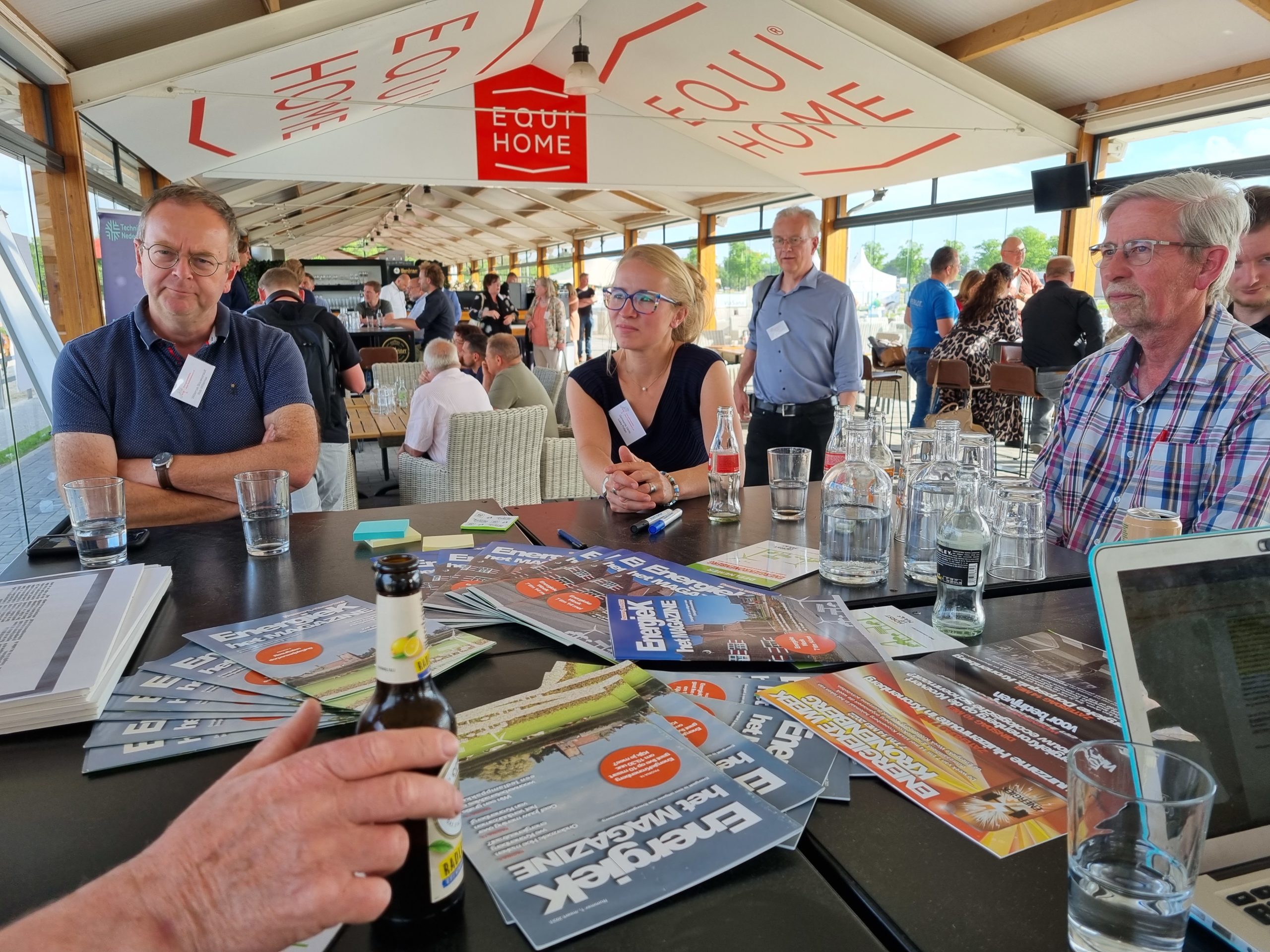
 Several speakers and attendees reported that this event was valuable for many reasons, not least because it gave them an opportunity to meet and build relationships with others working towards the same goal. An installer of central heating said that he wants to meet other people like him in the business sector and this event allows him to do so. A municipality worker summed the point up as such:
“We need to get off the gas grid and the municipality cannot do that (on its own), it will have to happen from the outside, which is why it is important that we organise things like this. It is important to reach the citizens, but we also have to take other things into account like the capacity of the network. So it is all about working together. We need to build a chain in which we can work together. Nobody can do it themselves, we need to work together.”
We heard from a diverse range of speakers and workshops about the various initiatives that currently make up the energy transition ecosystem in the Netherlands and in North Limburg: Techniek Netherlands, EnergieKronenberg, Sustainable Building Company, Enexis, the Horst Van de Maas municipality, and others.
Techniek Netherlands is the business association of technical service providers, installation companies and the technical retail sector, representing more than 6,000 companies. The audience learned about a digital platform that Techniek Netherlands has built to help companies involved in the energy transition understand emerging energy policies and identify opportunities for implementation.
There are 30 regions in the Netherlands all with different policy plans. Techniek Netherlands collates and translates this information in a format that is helpful for local businesses. The information comes from 33 different courses and is updated 4 times a year, and an installer can download a short PDF summarising the implications of their business. The information allows businesses to identify new customers as well as develop their own internal business transition plan (with regard to the business model, number of staff employed, technologies used, etc.) so that their businesses continue to evolve and adapt to the needs of the energy transition. For example, a business can see where a policy is requiring new heat networks to be created. Instead of becoming scared by these big changes, the company can begin upgrading its business model to service these new heat networks.
Enexis is the Dutch network grid operator. The audience heard that the grid is preparing to be ready for hydrogen as the gas network and capacity are suitable for hydrogen. Enexis transports energy in the north and south east of the country. Responding to the many cultural false stories about the impossibility of the energy transition, the speaker stressed that it is not true that the grid is full; it is more a question of adapting the equipment. Some of the key challenges faced by the Dutch grid are:
Several speakers and attendees reported that this event was valuable for many reasons, not least because it gave them an opportunity to meet and build relationships with others working towards the same goal. An installer of central heating said that he wants to meet other people like him in the business sector and this event allows him to do so. A municipality worker summed the point up as such:
“We need to get off the gas grid and the municipality cannot do that (on its own), it will have to happen from the outside, which is why it is important that we organise things like this. It is important to reach the citizens, but we also have to take other things into account like the capacity of the network. So it is all about working together. We need to build a chain in which we can work together. Nobody can do it themselves, we need to work together.”
We heard from a diverse range of speakers and workshops about the various initiatives that currently make up the energy transition ecosystem in the Netherlands and in North Limburg: Techniek Netherlands, EnergieKronenberg, Sustainable Building Company, Enexis, the Horst Van de Maas municipality, and others.
Techniek Netherlands is the business association of technical service providers, installation companies and the technical retail sector, representing more than 6,000 companies. The audience learned about a digital platform that Techniek Netherlands has built to help companies involved in the energy transition understand emerging energy policies and identify opportunities for implementation.
There are 30 regions in the Netherlands all with different policy plans. Techniek Netherlands collates and translates this information in a format that is helpful for local businesses. The information comes from 33 different courses and is updated 4 times a year, and an installer can download a short PDF summarising the implications of their business. The information allows businesses to identify new customers as well as develop their own internal business transition plan (with regard to the business model, number of staff employed, technologies used, etc.) so that their businesses continue to evolve and adapt to the needs of the energy transition. For example, a business can see where a policy is requiring new heat networks to be created. Instead of becoming scared by these big changes, the company can begin upgrading its business model to service these new heat networks.
Enexis is the Dutch network grid operator. The audience heard that the grid is preparing to be ready for hydrogen as the gas network and capacity are suitable for hydrogen. Enexis transports energy in the north and south east of the country. Responding to the many cultural false stories about the impossibility of the energy transition, the speaker stressed that it is not true that the grid is full; it is more a question of adapting the equipment. Some of the key challenges faced by the Dutch grid are:
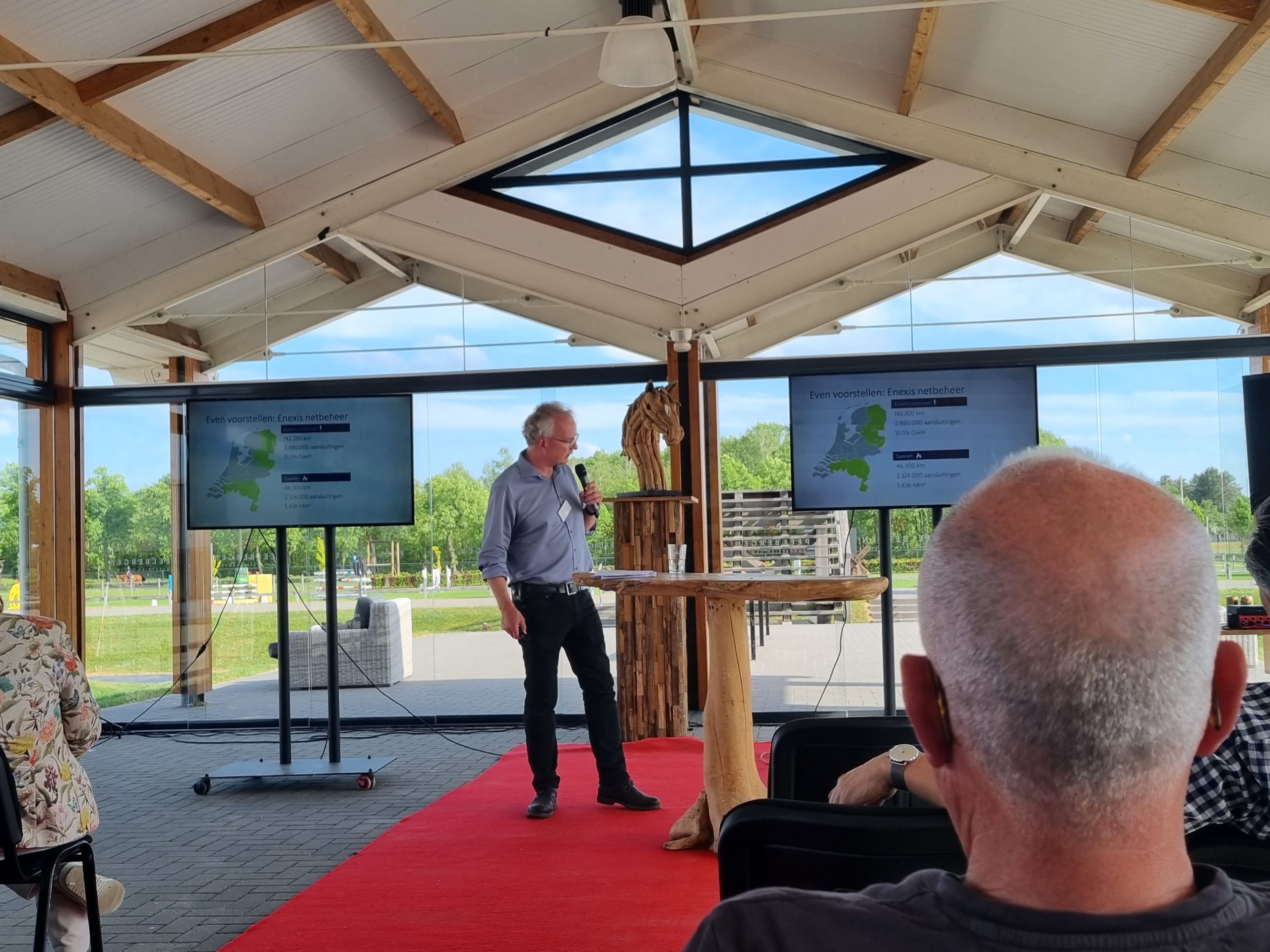 The speaker suggested the solution to the challenges is diversifying the energy highway. This means increasing the battery, storage and heat network capacities as these types of technologies have energy savings potential. It also means increasing cable pooling, creating a better balance between solar and wind, decreasing the distance between production and use of energy (so more local energy production projects), using gas and hydrogen as a hybrid energy source; and creating a system where there is an advance agreement between producers and consumers regarding how much energy will be produced and consumed. In short, a much smarter grid than that which exists currently!
Refreshingly, the speaker was in favour of getting rid of gas, an unusual position taken by business. Solar production is already high in the summer; a heat pump can decrease gas use in the winter. These recommendations are in line with what the lay citizens of EnergieKronenberg have themselves concluded. It was reassuring to see the more technical perspectives of the transition matching with the more citizen-oriented perspectives.
The representative from Horst aan de Maas, the regional municipality, expressed his deep respect and gratitude for Enexis and the installers present. The speaker said that in Europe and at the Hague, people have been waiting for over 40 years for these kinds of changes; it is heartening that they are finally happening. He reflected that the task for the municipality is now to create nurturing conditions for the energy transition; such as standardised rules and policies and listening and responding to businesses and citizens.
Following the speakers, EnergieKronenberg held a workshop at the event enabling the collective and the businesses present to exchange their experiences and build stronger relationships with each other.
EnergieKronenberg shared that it takes a lot of volunteer energy to keep a collective going, to keep people engaged and their hopes and spirits up. For all households to transition to renewable heating takes many years. On top of this, there aren’t enough installers or advisors available to help EnergieKronenberg. For example, EnergieKronenberg collected many questions for advisors in an installation business, but the advisors didn’t have time to respond. This was discouraging. EnergieKronenberg wished that the government recognised how important citizen collectives are for the energy transition and paid them to keep encouraging the households, the businesses and the municipalities. Now there is a radical idea!
The discussion that followed debated the pros and cons of dealing with a collective. It is generally easier for a collective to find the information they need compared to one person on their own who has to do everything. For a business, both individuals and collectives can be ambassadors to their neighbours creating a sustainability market on the street or in the neighbourhood, giving businesses a reason set up shop in that area. But on the other hand, some businesses don’t want to work with a collective because different people may want different things!
A theme that kept emerging is that there just aren’t enough businesses interested in the energy transition, and that those who are don’t have enough skilled staff. How can we ensure the work force can carry out the work needed? How can we make people feel proud to be working with their hands again? More collective thinking is needed.
Other challenges faced by businesses include the exorbitant cost of equipment but those who don’t wish to change their specialism will be left behind. The group discussed some ideas of how to encourage businesses. For e.g. municipalities working more in collaboration with businesses, creating one-stop shops to encourage the growth of a sustainability market, setting mandatory standards regarding energy efficiency standards to provide local businesses guaranteed work – so if someone wants to sell their house, they will be forced to upgrade their energy efficiency standards. EnergieKronenberg is also trying to encourage people – there is a sticker local people can put on their windows to raise awareness of the issues and signal their support.
In the closing plenary, everyone agreed that more needs to be done and soon. Everyone needs to work towards energy neutrality. Everyone needs to understand that the goal requires each and everyone to start thinking outside the box, become more flexible and learn to let go of the way that they always did things.
For example, EnergieKronenberg’s Chairman Piet Selen observed the following:
“I thought it was an interesting event. During the workshops, I noticed that companies were mostly looking to get in touch with each other. The need to involve citizens as well wasn’t quite there. Still, it was interesting to be part of this and it’s good for the companies to see that there are citizens who want to get involved and help spark the energy transition.”
Overall, the attendees reflected that knowledge exchange events are really helpful because it gets people talking to each other rather than about each other. At such events, people are able to recognise they have important values in common. For example: equality, inclusivity, safety, need for support from the government, good colleagues and pleasure in work, fairness. Many wanted to continue connecting after the event and rumor has it that this kind of event will now become a regular occurrence in the region.
Community engagement events
A few days after the knowledge exchange event with municipalities and businesses, EnergieKronenberg organised a community engagement event. The aim of the event was to make the energy transition fun and appealing to all the local residents, young and old. Many ideas were bounced around over the course of several months. Everybody felt that having an in person event with good food and music was key to creating the right kind of atmosphere. But in these covid times, organising an in-person event is tricky! Even though after several months of lockdown many people are desperate for human contact, the risk of coronavirus remains real, especially for those who are vulnerable and immunocompromised. It was also tricky to imagine a time when there would be no lockdown restrictions. So we came to a compromise: a hybrid event, part held in the village hall and part held online. This also meant that if the coronavirus situation got worse, the in-person event numbers could be capped but people could still join online.
After more than 2 years of the pandemic, everyone has zoom fatigue. So the group, with mPower’s help, sought to learn how to create an engaging event for people who would join from their living rooms. The solution was to host a livestream with many interesting camera angles so even those joining via the internet could enjoy the festive atmosphere. The idea that the group finally settled on was an ‘energy quiz’. Much like a traditional pub quiz with teams and several rounds of questions, but energy themed! The group also invited well-known local names to be part of the panel asking the questions: The chairmen of the local football club, a member of the Village Council, a local councilor, and the local Mayor.
The speaker suggested the solution to the challenges is diversifying the energy highway. This means increasing the battery, storage and heat network capacities as these types of technologies have energy savings potential. It also means increasing cable pooling, creating a better balance between solar and wind, decreasing the distance between production and use of energy (so more local energy production projects), using gas and hydrogen as a hybrid energy source; and creating a system where there is an advance agreement between producers and consumers regarding how much energy will be produced and consumed. In short, a much smarter grid than that which exists currently!
Refreshingly, the speaker was in favour of getting rid of gas, an unusual position taken by business. Solar production is already high in the summer; a heat pump can decrease gas use in the winter. These recommendations are in line with what the lay citizens of EnergieKronenberg have themselves concluded. It was reassuring to see the more technical perspectives of the transition matching with the more citizen-oriented perspectives.
The representative from Horst aan de Maas, the regional municipality, expressed his deep respect and gratitude for Enexis and the installers present. The speaker said that in Europe and at the Hague, people have been waiting for over 40 years for these kinds of changes; it is heartening that they are finally happening. He reflected that the task for the municipality is now to create nurturing conditions for the energy transition; such as standardised rules and policies and listening and responding to businesses and citizens.
Following the speakers, EnergieKronenberg held a workshop at the event enabling the collective and the businesses present to exchange their experiences and build stronger relationships with each other.
EnergieKronenberg shared that it takes a lot of volunteer energy to keep a collective going, to keep people engaged and their hopes and spirits up. For all households to transition to renewable heating takes many years. On top of this, there aren’t enough installers or advisors available to help EnergieKronenberg. For example, EnergieKronenberg collected many questions for advisors in an installation business, but the advisors didn’t have time to respond. This was discouraging. EnergieKronenberg wished that the government recognised how important citizen collectives are for the energy transition and paid them to keep encouraging the households, the businesses and the municipalities. Now there is a radical idea!
The discussion that followed debated the pros and cons of dealing with a collective. It is generally easier for a collective to find the information they need compared to one person on their own who has to do everything. For a business, both individuals and collectives can be ambassadors to their neighbours creating a sustainability market on the street or in the neighbourhood, giving businesses a reason set up shop in that area. But on the other hand, some businesses don’t want to work with a collective because different people may want different things!
A theme that kept emerging is that there just aren’t enough businesses interested in the energy transition, and that those who are don’t have enough skilled staff. How can we ensure the work force can carry out the work needed? How can we make people feel proud to be working with their hands again? More collective thinking is needed.
Other challenges faced by businesses include the exorbitant cost of equipment but those who don’t wish to change their specialism will be left behind. The group discussed some ideas of how to encourage businesses. For e.g. municipalities working more in collaboration with businesses, creating one-stop shops to encourage the growth of a sustainability market, setting mandatory standards regarding energy efficiency standards to provide local businesses guaranteed work – so if someone wants to sell their house, they will be forced to upgrade their energy efficiency standards. EnergieKronenberg is also trying to encourage people – there is a sticker local people can put on their windows to raise awareness of the issues and signal their support.
In the closing plenary, everyone agreed that more needs to be done and soon. Everyone needs to work towards energy neutrality. Everyone needs to understand that the goal requires each and everyone to start thinking outside the box, become more flexible and learn to let go of the way that they always did things.
For example, EnergieKronenberg’s Chairman Piet Selen observed the following:
“I thought it was an interesting event. During the workshops, I noticed that companies were mostly looking to get in touch with each other. The need to involve citizens as well wasn’t quite there. Still, it was interesting to be part of this and it’s good for the companies to see that there are citizens who want to get involved and help spark the energy transition.”
Overall, the attendees reflected that knowledge exchange events are really helpful because it gets people talking to each other rather than about each other. At such events, people are able to recognise they have important values in common. For example: equality, inclusivity, safety, need for support from the government, good colleagues and pleasure in work, fairness. Many wanted to continue connecting after the event and rumor has it that this kind of event will now become a regular occurrence in the region.
Community engagement events
A few days after the knowledge exchange event with municipalities and businesses, EnergieKronenberg organised a community engagement event. The aim of the event was to make the energy transition fun and appealing to all the local residents, young and old. Many ideas were bounced around over the course of several months. Everybody felt that having an in person event with good food and music was key to creating the right kind of atmosphere. But in these covid times, organising an in-person event is tricky! Even though after several months of lockdown many people are desperate for human contact, the risk of coronavirus remains real, especially for those who are vulnerable and immunocompromised. It was also tricky to imagine a time when there would be no lockdown restrictions. So we came to a compromise: a hybrid event, part held in the village hall and part held online. This also meant that if the coronavirus situation got worse, the in-person event numbers could be capped but people could still join online.
After more than 2 years of the pandemic, everyone has zoom fatigue. So the group, with mPower’s help, sought to learn how to create an engaging event for people who would join from their living rooms. The solution was to host a livestream with many interesting camera angles so even those joining via the internet could enjoy the festive atmosphere. The idea that the group finally settled on was an ‘energy quiz’. Much like a traditional pub quiz with teams and several rounds of questions, but energy themed! The group also invited well-known local names to be part of the panel asking the questions: The chairmen of the local football club, a member of the Village Council, a local councilor, and the local Mayor.
 This was the first time EnergieKronenberg would be organising a live stream energy quiz. There was lots to learn and many technical obstacles to overcome along the way. We quickly learnt that most livestream softwares create too much of a lag between the quiz answers coming in and the points being counted. We learned that we couldn’t just have a DJ play music while participants mulled over the quiz answers – because the event was being live streamed, EnergieKronenberg (and mPower by extension) would fall foul of copyright laws! Yes, we could purchase a copyright license but this would limit the choice of music creating too many unnecessary challenges. But not to worry – this is a group that has plenty of can-do attitudes, so vital for the energy transition. Solutions were found. Specialist software was purchased (Kahoot) that enabled real-time answer checking and point counting, and a local band – Sidewinder – came to the rescue and provided the music. In fact, the copyright issues were a silver lining – by hiring a local band (and local caterers), EnergieKronenberg found even more ways to engage local residents.
 There were five rounds, each with a different theme that was introduced by the Mayor. Themes include: Sustainable Energy, EnergieKronenberg (of course – as a secondary aim of the event is to increase the collective’s membership), Hidden Impacts, Climate & Environment, and Food & Health. Developing the questions was a collective endeavour. Sample questions include:
Once a pathway to becoming energy neutral was selected, the collective began organising a number of initiatives: writing a climate agreement with the municipality; supporting citizens with advice and information on how to install a range of measures from LED lighting to solar panels; conducting household energy audits that establish the household’s energy use and potential for heat pumps and deep retrofitting measures; and applying for a subsidy that would provide funding for the measures. In addition, the collective also publishes a magazine 2-3 times a year to engage the wider community in energy transition topics.
Since 2021, mPower has been supporting EnergieKronenberg in their citizen and political engagement processes. EnergieKronenberg has had both successes and setbacks. A major success has been identifying and working with ‘frontrunner’ residents who want to make their home natural gas-free. A recent major setback was not acquiring the subsidy, which went to the neighbouring village instead.
As of 2022, the three main energy transition challenges facing EnergieKronenberg are:
- Industry capacity – does the industry have enough personnel to implement the works and do the personnel have the relevant skills?
- Financial constraints – how to finance the energy transition in the light of not receiving the subsidy?
- Citizen engagement – engagement of the wider community in the energy transition beyond the core group
- A class for school children on climate change
- Local strategy, learning and knowledge exchange event in collaboration with the local municipality and business community. The aim of this event is to discuss collective solutions to the technical challenges outlined above.
- An energy quiz styled like a pub quiz in Kroneberg’s village hall. The aim of this event is to engage local residents, young and old, in the energy transition; to make the energy transition feel fun, welcoming and relevant to all citizens.
Several speakers and attendees reported that this event was valuable for many reasons, not least because it gave them an opportunity to meet and build relationships with others working towards the same goal. An installer of central heating said that he wants to meet other people like him in the business sector and this event allows him to do so. A municipality worker summed the point up as such:
“We need to get off the gas grid and the municipality cannot do that (on its own), it will have to happen from the outside, which is why it is important that we organise things like this. It is important to reach the citizens, but we also have to take other things into account like the capacity of the network. So it is all about working together. We need to build a chain in which we can work together. Nobody can do it themselves, we need to work together.”
We heard from a diverse range of speakers and workshops about the various initiatives that currently make up the energy transition ecosystem in the Netherlands and in North Limburg: Techniek Netherlands, EnergieKronenberg, Sustainable Building Company, Enexis, the Horst Van de Maas municipality, and others.
Techniek Netherlands is the business association of technical service providers, installation companies and the technical retail sector, representing more than 6,000 companies. The audience learned about a digital platform that Techniek Netherlands has built to help companies involved in the energy transition understand emerging energy policies and identify opportunities for implementation.
There are 30 regions in the Netherlands all with different policy plans. Techniek Netherlands collates and translates this information in a format that is helpful for local businesses. The information comes from 33 different courses and is updated 4 times a year, and an installer can download a short PDF summarising the implications of their business. The information allows businesses to identify new customers as well as develop their own internal business transition plan (with regard to the business model, number of staff employed, technologies used, etc.) so that their businesses continue to evolve and adapt to the needs of the energy transition. For example, a business can see where a policy is requiring new heat networks to be created. Instead of becoming scared by these big changes, the company can begin upgrading its business model to service these new heat networks.
Enexis is the Dutch network grid operator. The audience heard that the grid is preparing to be ready for hydrogen as the gas network and capacity are suitable for hydrogen. Enexis transports energy in the north and south east of the country. Responding to the many cultural false stories about the impossibility of the energy transition, the speaker stressed that it is not true that the grid is full; it is more a question of adapting the equipment. Some of the key challenges faced by the Dutch grid are:
- There is a lot of solar energy on roofs and fields but not much wind. If the sun doesn’t shine there is no solar energy across Western Europe. This is not a problem for small companies and households but it is a big issue for industries that use a lot of energy.
- Currently, the wind production capacity in the Netherlands is very low: 5 to 7%.
- There is currently a waiting list for transporting energy to companies. Enexis is forced to make difficult choices about who to connect.
- Labour shortage problems: The personnel and professional skills and knowledge to implement these changes are lacking.
The speaker suggested the solution to the challenges is diversifying the energy highway. This means increasing the battery, storage and heat network capacities as these types of technologies have energy savings potential. It also means increasing cable pooling, creating a better balance between solar and wind, decreasing the distance between production and use of energy (so more local energy production projects), using gas and hydrogen as a hybrid energy source; and creating a system where there is an advance agreement between producers and consumers regarding how much energy will be produced and consumed. In short, a much smarter grid than that which exists currently!
Refreshingly, the speaker was in favour of getting rid of gas, an unusual position taken by business. Solar production is already high in the summer; a heat pump can decrease gas use in the winter. These recommendations are in line with what the lay citizens of EnergieKronenberg have themselves concluded. It was reassuring to see the more technical perspectives of the transition matching with the more citizen-oriented perspectives.
The representative from Horst aan de Maas, the regional municipality, expressed his deep respect and gratitude for Enexis and the installers present. The speaker said that in Europe and at the Hague, people have been waiting for over 40 years for these kinds of changes; it is heartening that they are finally happening. He reflected that the task for the municipality is now to create nurturing conditions for the energy transition; such as standardised rules and policies and listening and responding to businesses and citizens.
Following the speakers, EnergieKronenberg held a workshop at the event enabling the collective and the businesses present to exchange their experiences and build stronger relationships with each other.
EnergieKronenberg shared that it takes a lot of volunteer energy to keep a collective going, to keep people engaged and their hopes and spirits up. For all households to transition to renewable heating takes many years. On top of this, there aren’t enough installers or advisors available to help EnergieKronenberg. For example, EnergieKronenberg collected many questions for advisors in an installation business, but the advisors didn’t have time to respond. This was discouraging. EnergieKronenberg wished that the government recognised how important citizen collectives are for the energy transition and paid them to keep encouraging the households, the businesses and the municipalities. Now there is a radical idea!
The discussion that followed debated the pros and cons of dealing with a collective. It is generally easier for a collective to find the information they need compared to one person on their own who has to do everything. For a business, both individuals and collectives can be ambassadors to their neighbours creating a sustainability market on the street or in the neighbourhood, giving businesses a reason set up shop in that area. But on the other hand, some businesses don’t want to work with a collective because different people may want different things!
A theme that kept emerging is that there just aren’t enough businesses interested in the energy transition, and that those who are don’t have enough skilled staff. How can we ensure the work force can carry out the work needed? How can we make people feel proud to be working with their hands again? More collective thinking is needed.
Other challenges faced by businesses include the exorbitant cost of equipment but those who don’t wish to change their specialism will be left behind. The group discussed some ideas of how to encourage businesses. For e.g. municipalities working more in collaboration with businesses, creating one-stop shops to encourage the growth of a sustainability market, setting mandatory standards regarding energy efficiency standards to provide local businesses guaranteed work – so if someone wants to sell their house, they will be forced to upgrade their energy efficiency standards. EnergieKronenberg is also trying to encourage people – there is a sticker local people can put on their windows to raise awareness of the issues and signal their support.
In the closing plenary, everyone agreed that more needs to be done and soon. Everyone needs to work towards energy neutrality. Everyone needs to understand that the goal requires each and everyone to start thinking outside the box, become more flexible and learn to let go of the way that they always did things.
For example, EnergieKronenberg’s Chairman Piet Selen observed the following:
“I thought it was an interesting event. During the workshops, I noticed that companies were mostly looking to get in touch with each other. The need to involve citizens as well wasn’t quite there. Still, it was interesting to be part of this and it’s good for the companies to see that there are citizens who want to get involved and help spark the energy transition.”
Overall, the attendees reflected that knowledge exchange events are really helpful because it gets people talking to each other rather than about each other. At such events, people are able to recognise they have important values in common. For example: equality, inclusivity, safety, need for support from the government, good colleagues and pleasure in work, fairness. Many wanted to continue connecting after the event and rumor has it that this kind of event will now become a regular occurrence in the region.
Community engagement events
A few days after the knowledge exchange event with municipalities and businesses, EnergieKronenberg organised a community engagement event. The aim of the event was to make the energy transition fun and appealing to all the local residents, young and old. Many ideas were bounced around over the course of several months. Everybody felt that having an in person event with good food and music was key to creating the right kind of atmosphere. But in these covid times, organising an in-person event is tricky! Even though after several months of lockdown many people are desperate for human contact, the risk of coronavirus remains real, especially for those who are vulnerable and immunocompromised. It was also tricky to imagine a time when there would be no lockdown restrictions. So we came to a compromise: a hybrid event, part held in the village hall and part held online. This also meant that if the coronavirus situation got worse, the in-person event numbers could be capped but people could still join online.
After more than 2 years of the pandemic, everyone has zoom fatigue. So the group, with mPower’s help, sought to learn how to create an engaging event for people who would join from their living rooms. The solution was to host a livestream with many interesting camera angles so even those joining via the internet could enjoy the festive atmosphere. The idea that the group finally settled on was an ‘energy quiz’. Much like a traditional pub quiz with teams and several rounds of questions, but energy themed! The group also invited well-known local names to be part of the panel asking the questions: The chairmen of the local football club, a member of the Village Council, a local councilor, and the local Mayor.
This was the first time EnergieKronenberg would be organising a live stream energy quiz. There was lots to learn and many technical obstacles to overcome along the way. We quickly learnt that most livestream softwares create too much of a lag between the quiz answers coming in and the points being counted. We learned that we couldn’t just have a DJ play music while participants mulled over the quiz answers – because the event was being live streamed, EnergieKronenberg (and mPower by extension) would fall foul of copyright laws! Yes, we could purchase a copyright license but this would limit the choice of music creating too many unnecessary challenges. But not to worry – this is a group that has plenty of can-do attitudes, so vital for the energy transition. Solutions were found. Specialist software was purchased (Kahoot) that enabled real-time answer checking and point counting, and a local band – Sidewinder – came to the rescue and provided the music. In fact, the copyright issues were a silver lining – by hiring a local band (and local caterers), EnergieKronenberg found even more ways to engage local residents.
There were five rounds, each with a different theme that was introduced by the Mayor. Themes include: Sustainable Energy, EnergieKronenberg (of course – as a secondary aim of the event is to increase the collective’s membership), Hidden Impacts, Climate & Environment, and Food & Health. Developing the questions was a collective endeavour. Sample questions include:
- In the last century, the so-called Club of Rome released the report “Limits to growth”. For the first time, scientists warned that the Earth was warming as a result of human actions. The signal was taken seriously in the Netherlands for a while and caused an energy crisis as well as the well-known car-free Sundays. In which year the report “Limits to Growth” was published?
- We are going to look at global warming from 1880 to 2021. But the question is, what number of degrees is allowed to warm up to as recently agreed during the climate summit in Glasgow 2021?
- How much plastic do we only use once?